
Key Stage 3 - Lower Secondary at Oxford Manor College
Years 7–9

Lower Secondary (Years 7-9)

Our Lower Secondary program follows the Cambridge Lower Secondary framework, providing a broad and balanced curriculum that builds strong foundations across all subject areas. Students develop critical thinking skills, creativity, and a love for learning while preparing for Cambridge Checkpoint Examinations in Year 9.

Subjects at a glance

Mathematics
First Language English
Science
Information and Communication Technology (ICT)
History
Geography
French
Mandarin Chinese
Music
Art and Design
Physical Education (PE)
Mathematics
First Language English
Science
Information and Communication Technology (ICT)
History
Geography
French
Mandarin Chinese
Music
Art and Design
Physical Education (PE)

Age range: Years 10-14

Lower Secondary builds strong foundations across all subject areas and prepares students for Cambridge Checkpoint in Year 9.

Lower Secondary learning

Subjects & student learning

Mathematics

Mathematics

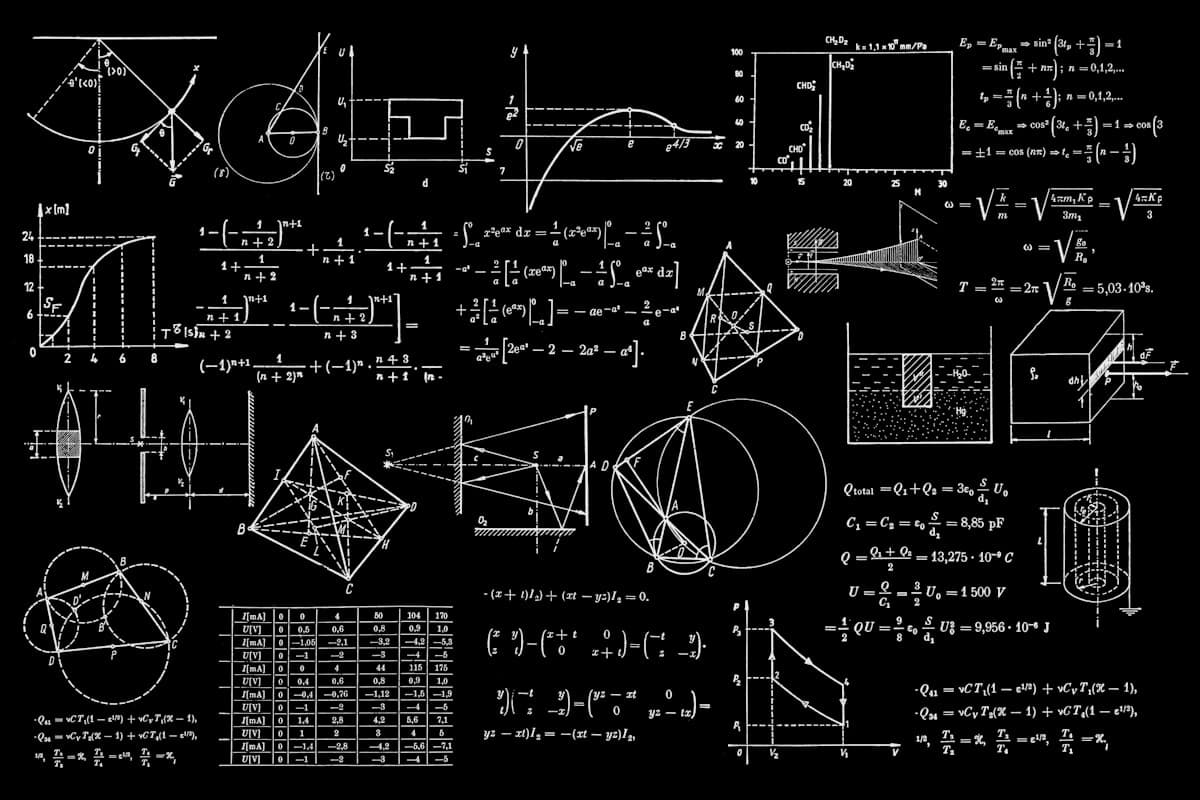
Students develop a strong foundation in number, algebra, geometry, and statistics. The curriculum emphasises real-world applications, logical reasoning, and the ability to communicate mathematical ideas clearly. Topics progress from arithmetic and basic algebra to more complex problem-solving and data handling, preparing learners for the rigours of IGCSE Mathematics.

Student learning

  • Numerical fluency and mental calculation strategies
  • Algebraic manipulation and solving equations
  • Geometric reasoning and spatial awareness
  • Data handling, statistics, and probability
  • Problem-solving and mathematical modelling
  • Clear presentation of mathematical arguments

First Language English

First Language English

Learners build confidence in reading, writing, speaking, and listening. The course covers a wide range of texts—fiction, non-fiction, and media—and develops analytical and creative writing skills. Emphasis is placed on grammar, vocabulary, and the ability to express ideas effectively for different audiences and purposes.

Student learning

  • Comprehension and critical analysis of texts
  • Creative and transactional writing
  • Speaking and listening in formal and informal contexts
  • Grammar, punctuation, and vocabulary development
  • Research and presentation skills
  • Understanding audience and purpose
Science

Science

Science is taught as an integrated subject, with clear strands in Biology, Chemistry, and Physics. Practical work is central: students carry out experiments, make observations, and learn to draw evidence-based conclusions. The curriculum builds scientific literacy and curiosity about the natural world while preparing for separate science subjects at IGCSE.

Student learning

  • Scientific enquiry and practical investigation
  • Biology: cells, organisms, and ecosystems
  • Chemistry: matter, reactions, and the periodic table
  • Physics: forces, energy, waves, and electricity
  • Data analysis and drawing conclusions
  • Scientific communication and reporting
Information and Communication Technology (ICT)

Information and Communication Technology (ICT)

Students learn to use technology effectively for learning, communication, and creativity. The course covers document production, spreadsheets, presentations, and an introduction to programming and data handling. E-safety and responsible use of technology are emphasised throughout.

Student learning

  • Using software for documents, spreadsheets, and presentations
  • Introduction to programming and algorithms
  • Data handling and digital research
  • E-safety and responsible use of technology
  • Digital communication and collaboration
  • Problem-solving with technology
History

History

Learners explore key periods and themes in local, national, and world history. They develop skills in source analysis, evaluating evidence, and constructing historical arguments. The curriculum encourages critical thinking about cause and effect, change and continuity, and the diversity of human experience.

Student learning

  • Chronological understanding and historical context
  • Source analysis and evaluating evidence
  • Cause and effect, change and continuity
  • Local, national, and global perspectives
  • Constructing and presenting historical arguments
  • Empathy and understanding of past societies
Geography

Geography

Geography covers physical processes (rivers, coasts, weather, ecosystems) and human geography (population, settlement, development, and resource use). Students use maps, data, and fieldwork to understand the world and the challenges of sustainability and global interdependence.

Student learning

  • Physical geography: landforms, climate, and ecosystems
  • Human geography: population, settlement, and development
  • Map skills and geographical enquiry
  • Environmental and sustainability issues
  • Fieldwork and data collection
  • Global interconnections and place knowledge
French

French

Students build the four skills—listening, speaking, reading, and writing—in French. Topics include everyday life, school, family, and culture. Grammar and vocabulary are taught in context, and learners are encouraged to communicate confidently and to appreciate French-speaking cultures.

Student learning

  • Listening and responding in French
  • Speaking with confidence and accuracy
  • Reading and understanding a range of texts
  • Writing for different purposes
  • Grammar and vocabulary in context
  • Cultural awareness of French-speaking countries
Mandarin Chinese

Mandarin Chinese

Learners are introduced to Mandarin through pinyin and characters. The course develops listening, speaking, reading, and writing, with an emphasis on practical communication. Cultural topics help students appreciate Chinese traditions and contemporary life.

Student learning

  • Pinyin and character recognition
  • Listening and speaking in Mandarin
  • Reading simple texts and characters
  • Writing characters and short passages
  • Everyday communication and topics
  • Cultural understanding of China and Chinese-speaking regions
Music

Music

Music lessons combine performing, composing, and listening. Students learn to read notation, play instruments, and create their own music. The curriculum covers a range of styles and cultures, developing both technical skills and musical understanding.

Student learning

  • Performing on instruments and voice
  • Composing and arranging music
  • Listening and appraising different genres
  • Reading notation and musical literacy
  • Understanding music in cultural and historical context
  • Collaboration in ensemble performance
Art and Design

Art and Design

Art and Design encourages experimentation with drawing, painting, printmaking, and digital media. Students study the work of artists and designers, develop ideas through sketchbooks, and produce finished pieces. The course builds confidence in visual communication and creative thinking.

Student learning

  • Drawing and observation skills
  • Painting, printmaking, and mixed media
  • Understanding colour, composition, and form
  • Researching artists and art movements
  • Developing ideas through sketchbooks
  • Presenting and evaluating artwork
Physical Education (PE)

Physical Education (PE)

PE develops competence in a range of sports and physical activities. Students learn about health, fitness, and the benefits of an active lifestyle. Team games, athletics, and individual activities build coordination, tactics, and cooperation.

Student learning

  • Participation in team and individual sports
  • Health-related fitness and training principles
  • Tactical understanding and decision-making
  • Cooperation, leadership, and fair play
  • Understanding rules and officiating
  • Lifelong habits for physical activity
Students in an ICT and computer room

Building foundations for IGCSE and beyond

Key highlights

  • Cambridge Lower Secondary curriculum framework
  • Cambridge Checkpoint Examinations in Year 9
  • Broad curriculum covering all core subjects
  • Student-centred and inquiry-based teaching approach
  • Regular assessments and progress tracking
  • Foundation for Cambridge IGCSE preparation